Kenya rugby sevens has become a symbol of sporting excellence. This fast-paced, seven-a-side version of the game is played throughout the year, both locally and on the international stage. Shujaa and the Kenya Lionesses – the men’s and women’s national teams, respectively – proudly represent the country globally.
The sport has gained widespread popularity among players and fans due to its speed and exciting style of play. Shujaa has further elevated Kenya’s profile through impressive performances in major global competitions.
Kenya’s rugby sevens legacy has been shaped by fearless performances against some of the world’s strongest teams, unforgettable moments on the international stage, and remarkable achievements that have inspired generations of players.
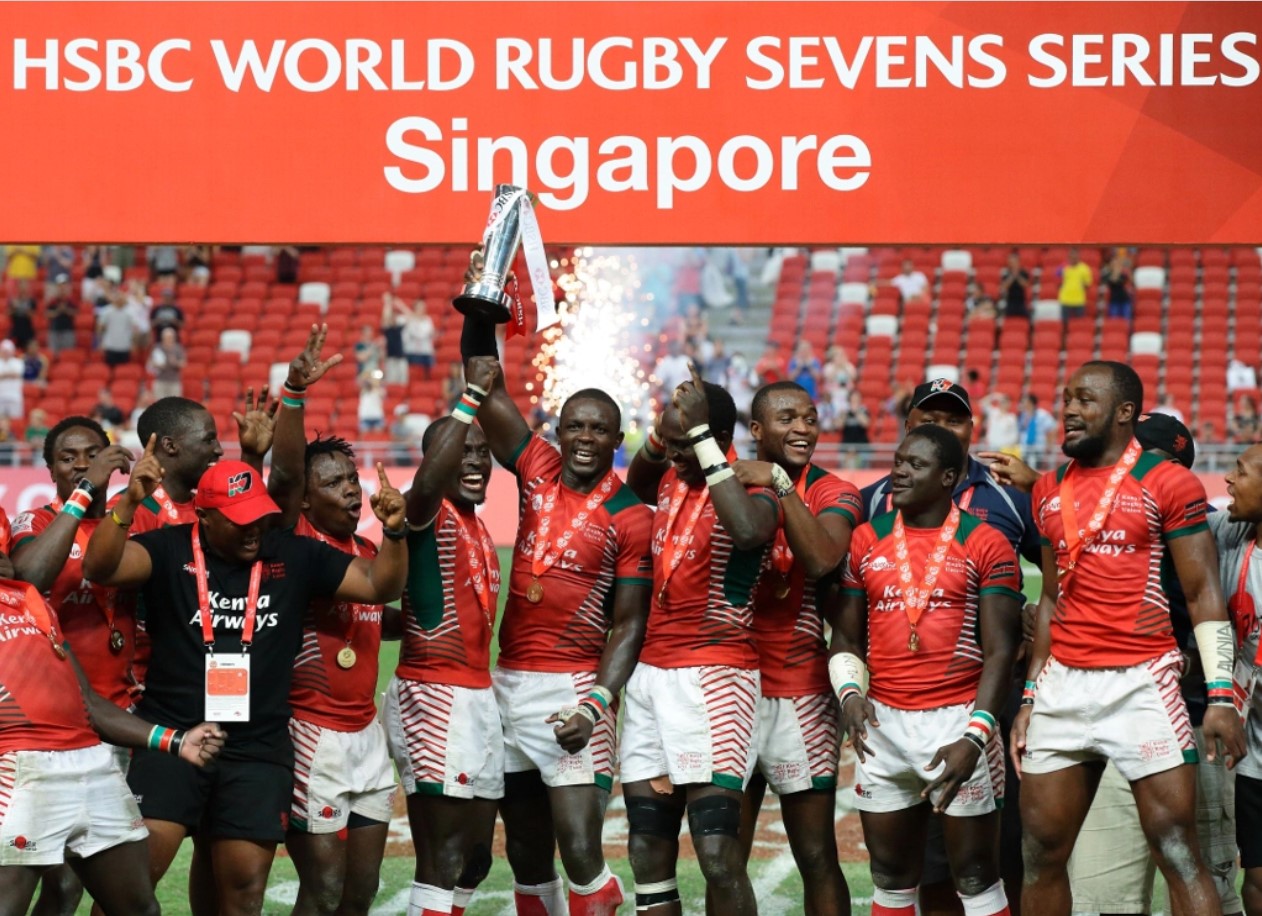
The historic 2016 World Sevens title in Singapore remains one of Kenya’s greatest sporting triumphs, while legendary try-scorer Collins Injera has become a symbol of excellence and consistency. At home, the National Sevens Circuit continues to nurture emerging talent and strengthen the sport’s foundation, ensuring its rich legacy endures.
Why Kenya sevens became a global force
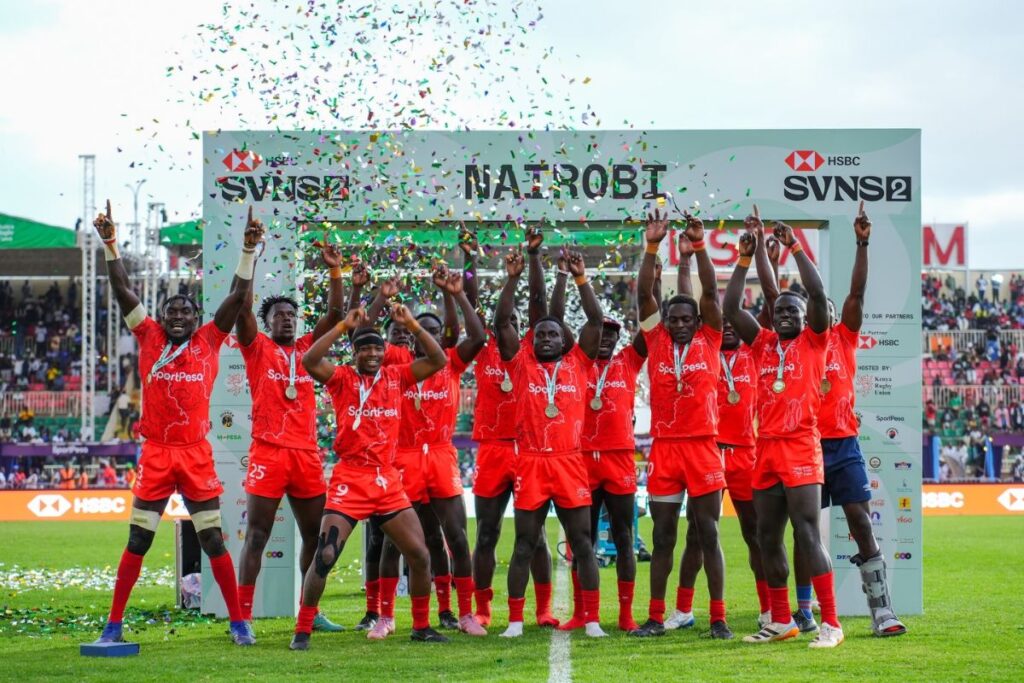
Shujaa rose to become a global rugby force through a blend of exceptional natural speed, a thriving schoolboy development network, and a fearless attacking style that repeatedly unsettled rugby’s traditional powerhouses. Shujaa’s fast-paced, entertaining brand of rugby earned them respect on the international stage while showcasing Kenya’s unique rugby identity.
The success of Shujaa was built on a strong grassroots foundation, where elite talent was consistently identified and nurtured in well-known top rugby high schools such as Maseno, Nairobi, and Musingu. These institutions have long served as breeding grounds for some of the country’s finest players, providing the technical skills, discipline, and competitive environment needed to excel at higher levels.
Beyond the schools, the Western and Rift Valley regions established themselves as vital rugby heartlands, producing quick, resilient, and physically gifted athletes who have formed the backbone of Kenya’s sevens success for decades.
Kenya’s vibrant domestic sevens circuit further strengthened this pathway by providing a highly competitive platform for emerging talent. It allowed standout players from local clubs to be identified before making the transition to the national team, ensuring a steady pipeline of talent capable of competing on the global stage.
The golden era
Kenya’s rugby sevens history is defined by landmark achievements that have cemented
Shujaa’s place among the world’s elite teams. The nation’s greatest triumph came in 2016 when Kenya stunned the rugby world by defeating Fiji 30–7 to win the Singapore Sevens, securing its first-ever World Rugby Sevens Series title.
Shujaa had already demonstrated its ability to compete with the best by reaching the Rugby World Cup Sevens semi-finals in both 2009 in Dubai and 2013 in Moscow, proving that Kenya was no longer just an emerging force but a genuine contender on the global stage.
More recently, the team confirmed its continental dominance by defeating South Africa 17–12 in the 2023 Rugby Africa Sevens final to secure qualification for the Paris 2024 Olympic Games. These achievements reflect the resilience, talent, and determination that have defined Kenya’s rugby sevens legacy while continuing to inspire future generations of players.
Challenges faced by Kenya sevens
Despite its remarkable achievements, Kenya’s rugby sevens journey has been marked by significant challenges that have threatened the team’s progress and long-term stability. Financial instability has been one of the biggest obstacles, with frequent delays in players’ salaries and allowances leading to strikes that disrupted team preparations.
Concurrently, disagreements between sponsors and the Kenya Rugby Union have resulted in the withdrawal of corporate support and even public branding protests on the team’s playing kits. Frequent changes in coaching staff further undermine continuity, making it difficult to build and sustain a long-term competitive squad.
Beyond financial and management issues, Shujaa has also struggled with the poor transition of experienced players into retirement, lacking adequate mentorship or succession plans for the next generation. The absence of well-established rugby academies across the country has limited talent development compared to leading rugby nations.
2026 disappointment
Shujaa failed to secure promotion to the 2027 HSBC SVNS Division One after finishing 11th in the final leg at the Bordeaux Sevens in France in June 2026. This result means they will remain in the second tier of the World Rugby Sevens Series – HSBC SVNS Champions – for a third consecutive season.
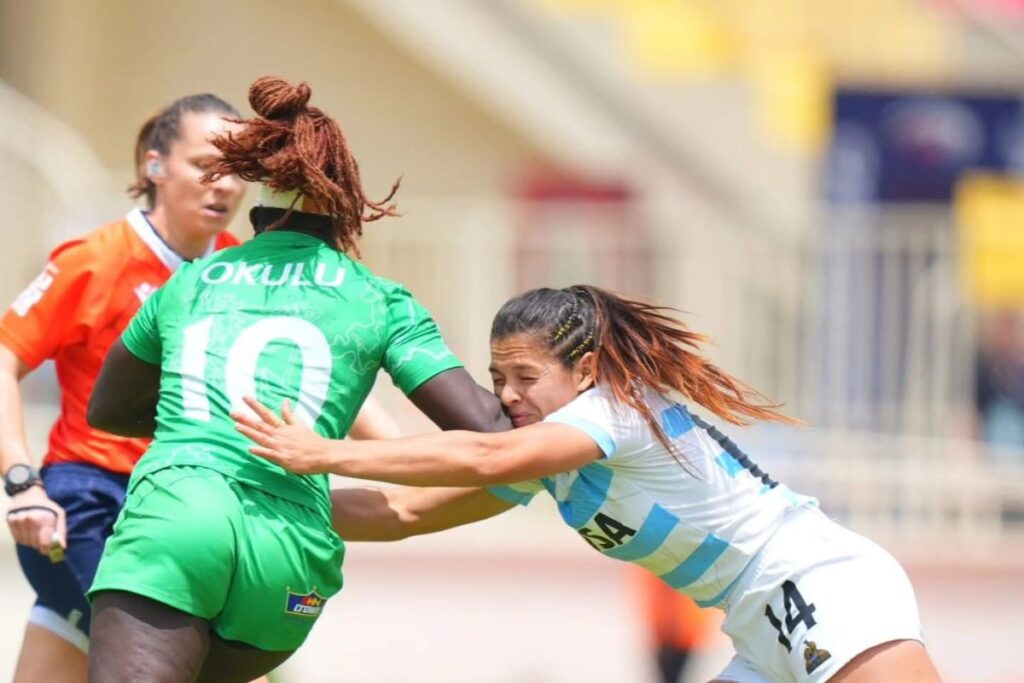
Similarly, the Lionesses also failed to qualify for the World Championship Series after finishing in the fourth-place decider at the final leg of the HSBC SVNS 2 in São Paulo, Brazil.
Consequently, the Lionesses will return to the drawing board, aiming to rebuild from their shortcomings at this level. They will restart from the regional Challenger level next season, hoping to climb back into SVNS 3, then SVNS 2, and, if they can develop into a formidable side, eventually reach SVNS 1 by 2028.
Wrap-up
Kenya’s rugby sevens is more than a collection of trophies or historic victories; it is a story of resilience, belief, and the courage to challenge the world’s best despite limited resources. That legacy was built by players who wore the national colours with pride, inspired millions of fans, and proved that Kenya belongs on rugby’s biggest stage.
Protecting that legacy now demands more than celebrating past achievements. It requires stronger domestic structures and better support for players. The next generation of Shujaa deserves an environment that allows talent to flourish and dreams to become reality.
The future of Kenyan rugby sevens will not be secured by memories alone, but by the decisions made today. If Kenya chooses to nurture its talent, strengthen its foundations, and believe once again in the spirit that made Shujaa a global force, then Kenya’s greatest rugby chapters are still waiting to be written.
Wayne Siayi is a journalism student at Zetech University in Thika, Kenya, who aims to utilise his skills to support the African sports sector in achieving its full potential.