


The 2026 Berlin Marathon promises another showcase of African distance-running excellence, with Kenya and Ethiopia again dominating the conversation at the front of both races. The event takes place on 27 September, and the women’s race in particular has the potential to produce a historic performance.
The biggest African name in the field is Ethiopia’s Tigst Assefa. The former world-record holder returns to the scene of her spectacular 2:11:53 performance in 2023 and has made no secret of her ambition to reclaim the world record. That mark has since been lowered to 2:09:56 by Kenya’s Ruth Chepngetich, while Assefa herself improved her women-only world record to 2:15:41 in London earlier this year.
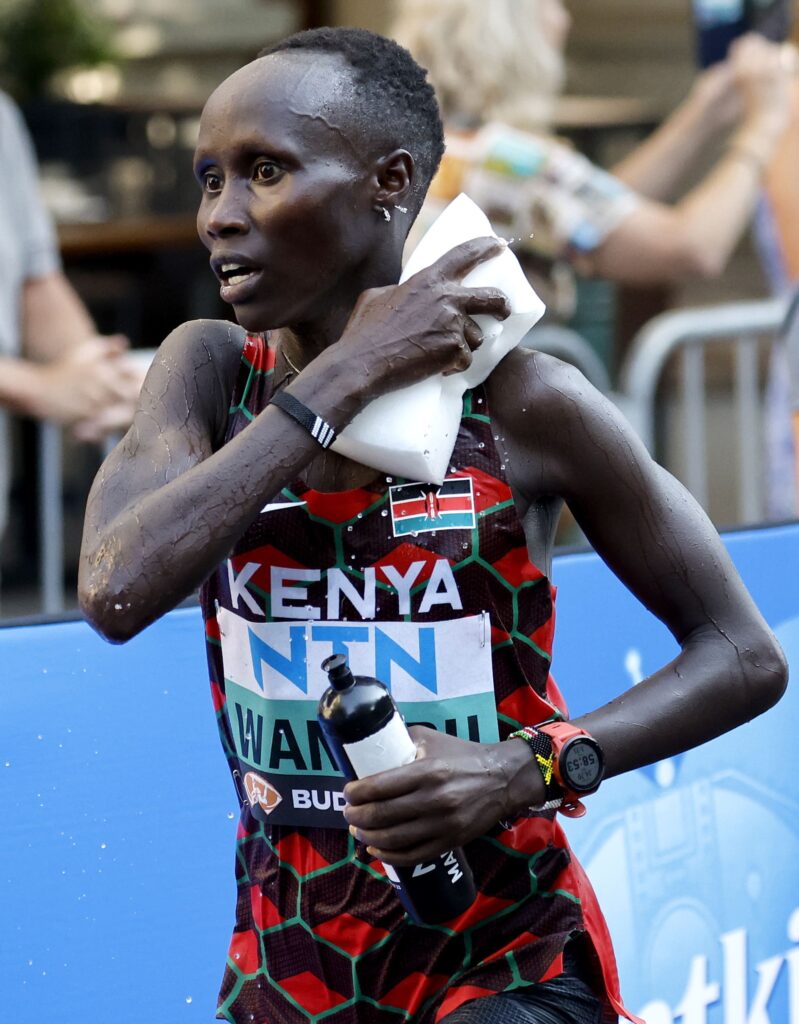
Assefa faces formidable African opposition. Defending champion Rosemary Wanjiru of Kenya returns to Berlin, where she won in 2025 in 2:21:05 after finishing runner-up on her marathon debut in 2022. Her experience on this course makes her a major threat, while Ethiopian former world champion Amane Beriso adds further depth to an extraordinary women’s field.
The men’s contest has lost its biggest African star, however. Kenya’s Sabastian Sawe, the 2025 champion, has withdrawn through injury. His absence is significant: Sawe won last year’s race in 2:02:16 before producing the extraordinary 1:59:30 in London in April 2026, becoming the first man to break two hours in a competitive marathon.
That opens the door for Ethiopia’s Milkesa Mengesha, who won Berlin in 2024 in 2:03:17, while Ethiopia’s Chimdessa Debele will also be worth watching after finishing third behind Sawe in 2025. African depth has been a defining feature of Berlin in recent years, with Ethiopian and Kenyan athletes repeatedly occupying the podium.
History strongly favours the continent. Ethiopian and Kenyan runners have dominated the women’s race in recent years, while Berlin’s modern men’s era was defined by Kenya’s Eliud Kipchoge, whose 2:01:09 course record from 2022 remains the benchmark.
With Assefa chasing history and Wanjiru defending her crown, the women’s race looks especially compelling. Even without Sawe, African runners remain central to the men’s title battle, ensuring that Berlin should once again be a celebration of the continent’s extraordinary marathon tradition.

What makes the Berlin Marathon special?
The world-record capital: Since the race began in 1974, the men’s marathon world record has been broken seven times in Berlin, more than at any other marathon.
Gebrselassie’s double: Ethiopia’s Haile Gebrselassie became the first man to break the marathon world record in Berlin twice, doing it in consecutive years: 2:04:26 in 2007 and 2:03:59 in 2008.
An African record-setter before the modern era: Kenya’s Paul Tergat smashed the world record in Berlin in 2003, running 2:04:55. He was famously pushed all the way by compatriot Sammy Korir, who finished just one second behind him.
Berlin has been incredibly fast for women too: Ethiopia’s Tegla Loroupe set a women’s world record in Berlin in 1999 with 2:20:43, while Japan’s Naoko Takahashi became the first woman to break 2:20 in the event, running 2:19:46 in 2001.
It started small: The inaugural Berlin Marathon in 1974 had just 286 runners and was held in the Grunewald Forest. Today, it attracts more than 40,000 finishers, making it one of the world’s largest mass-participation marathons.
Broadcast details
Times CAT
Berlin Marathon
Sunday 27 September
07:00: 52nd Edition – LIVE on SuperSport Action and SuperSport Maximo 3