


In Goma, the rumblings do not come only from the stadiums. In this city in eastern Democratic Republic of Congo, wedged between Lake Kivu and the volcanoes of Virunga National Park, war is never far away. Yet every morning, another battle plays out on the dusty pitches: that of Salama Miruho Jasmine, a woman who chose to lead a men’s team in the heart of an environment where football is still, by and large, a man’s world.
For now, her whistle no longer echoes across the grounds in Goma. War has brought DC Espoir’s training sessions to a halt, just as it has frozen much of sporting life in this city. The players have left the pitches, and training has been put on hold.
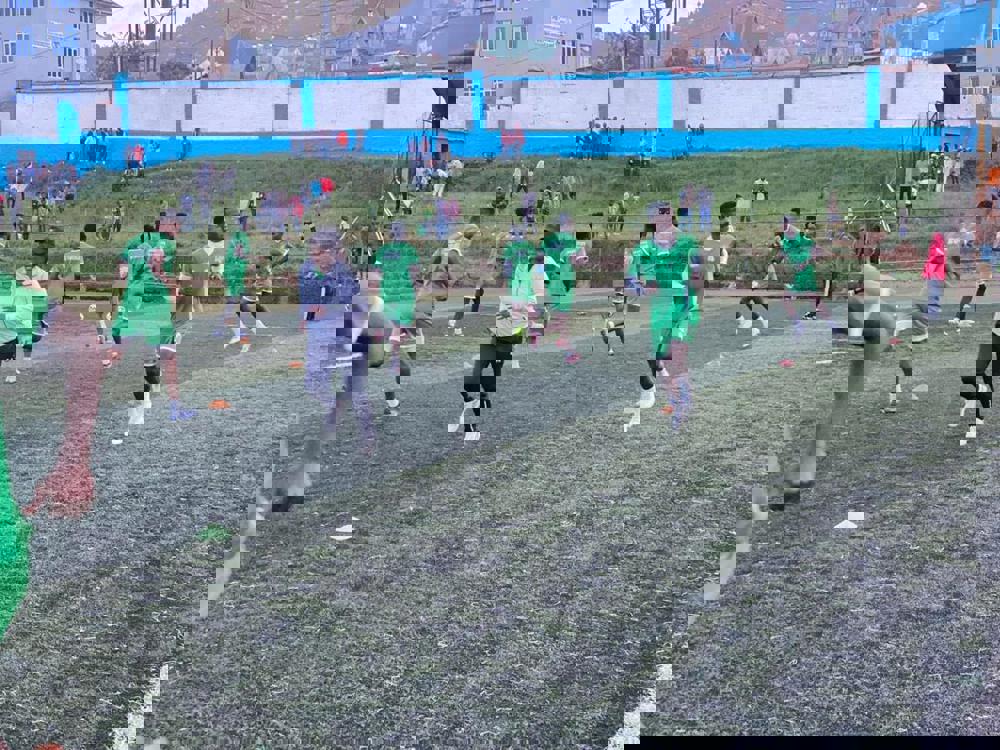
But the image remains intact: a circle of players gathered around her, hanging on her every word. In those moments, there was neither surprise nor hesitation in their eyes. To them, Salama was not “a woman coach”. She was simply ‘the coach’.
In a city where daily life is so often shaped by insecurity and uncertainty, her journey feels like a form of resistance. Even with the pitches fallen silent, the story of Jasmine still carries a message: that of a woman who chose to take her place, whistle in hand, at the heart of a game long reserved for men.
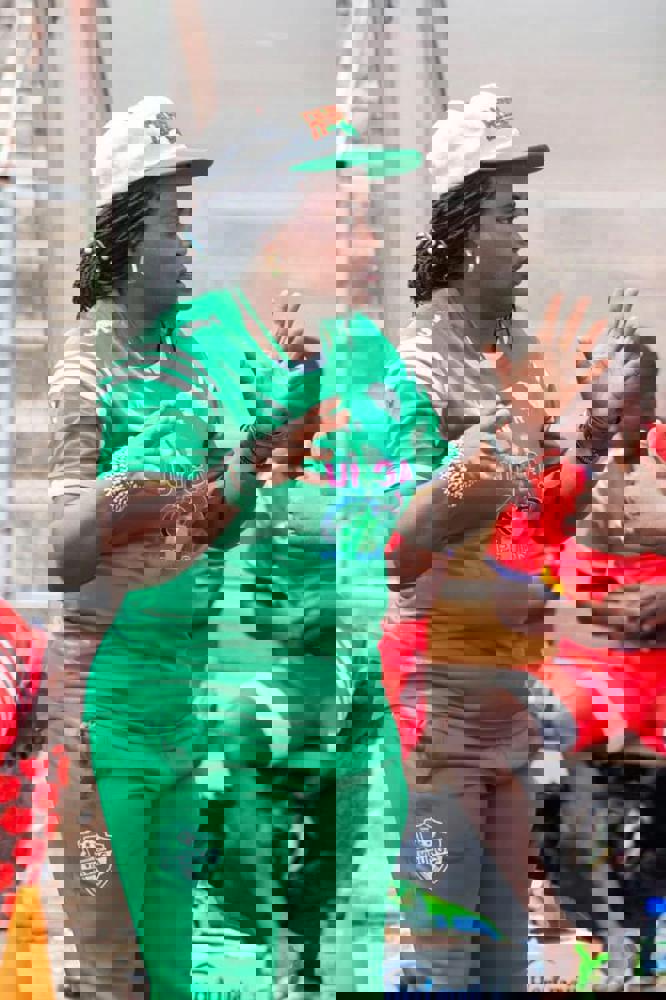
First steps at Simba de Goma
Before becoming a coach, Salama Miruho Jasmine was first a player. Her football journey began with Simba de Goma, a women’s team that took part in the Coupe du Congo in the 2018/19 season.
“I was a player. I played for Simba de Goma, who took part in the Congo Cup,” she says simply.
At the time, women’s football in the region was still fragile, but for the young woman from Goma, the passion had already taken root. Very quickly, she realised her path would not end on the white lines of the pitch. When her playing career came to an end, another door opened: the dugout.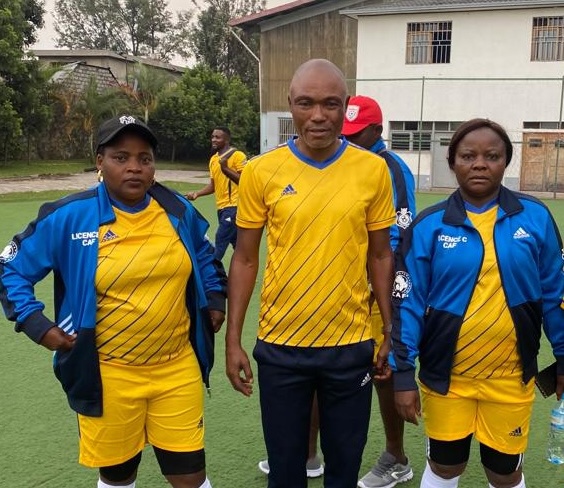
Learning the trade
Salama then decided to train as a coach. Her journey first took her to Kenya, where she followed a coaching programme inspired by the Dutch model. There, she discovered the foundations of Total Football: constant movement, versatile players and the importance of the collective in every phase of the game. It was a demanding school of thought that shaped her football vision and gradually informed the way she coaches.
Then came the federation qualifications in the Democratic Republic of Congo. She continued to progress until earning a CAF B Licence, while also building up hands-on experience on the training ground.
“I studied, I did a lot of courses. That is why today I have become Coach Salama, the way I am,” she explains.
Her first real immersion in coaching came at the Nyiragongo Football School, an academy founded in 2005 in Goma. There, she started with the basics: working with the youngest players.
“I started with children, boys aged five to 12.”
In those age groups, she discovered the job in its rawest form: teaching, correcting, encouraging. The pitch became an open-air classroom.
The challenge of coaching men’s teams
Her path then took her to Daring Club Virunga, one of Goma’s established clubs. She began there as an intern before joining the technical staff as an assistant coach.
It was a turning point. In Congolese football, seeing a woman in the technical team of a men’s side is still rare. But for Salama, the issue hardly arose.
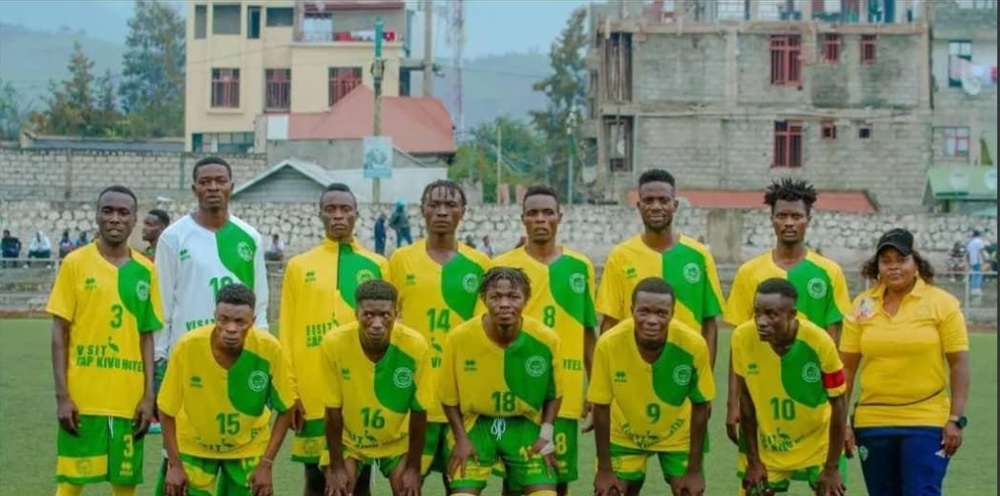
Her determination eventually won people over. DC Espoir then entrusted her with responsibility for the first team.
In Goma, the news made waves. A woman at the helm of a men’s team: the symbolism quickly went beyond football itself.
A coach’s authority
On the training ground, however, the symbolism soon gave way to the reality of daily work.
“When I give my instructions, the players are there to listen. Because I am the boss.”
Her voice is steady, calm yet firm. She does not seek to impose authority through confrontation. It comes naturally, built on competence, discipline and consistency.
“When I am at work, I take myself as a man. But at home, I am a woman.”
That sentence captures the full complexity of her position: operating in a largely male world while remaining true to her identity. In a game still steeped in stereotypes, every training session becomes, without speeches or slogans, a quiet statement.
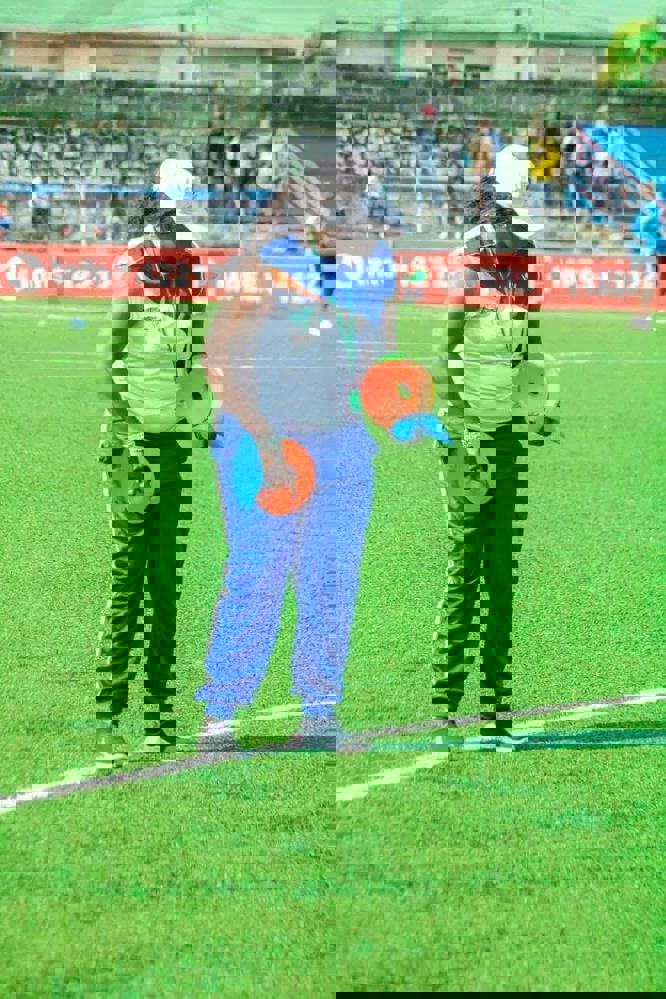
Yet for Salama Miruho Jasmine, gender should never come into the equation when it comes to football. In the dugout as on the pitch, the mission remains the same: to teach, to organise and to help a team improve.
Coaching men or women, she explains, is built on the same fundamentals above all else: discipline, understanding the game and trust between a coach and players. Beyond the differences, there is ultimately only one language in football: that of hard work and the collective.
A mother’s legacy
If Salama often speaks about football, she speaks even more often about another influence: her mother.
“The person who showed me what a winner is, is my mother.”
In their family of nine children, five girls and four boys, the rule was simple: a woman had to be strong and independent.
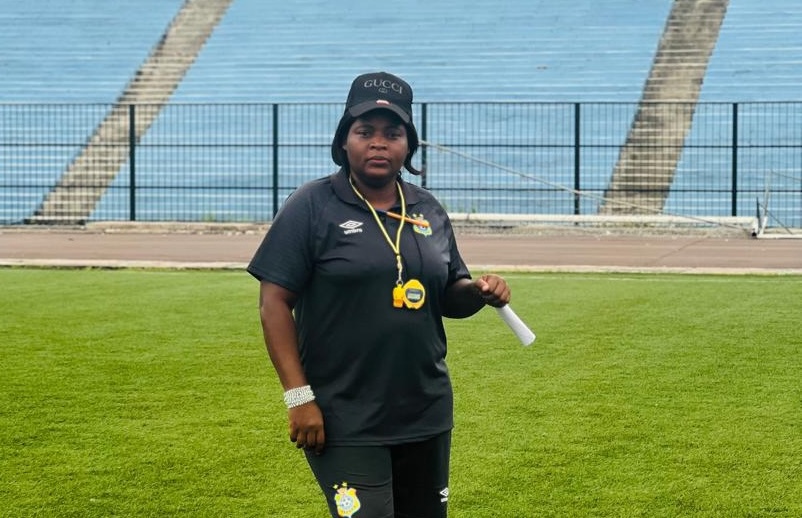
“My mother always said: a woman must be a fighter, a woman must be courageous. She must not stay only at home.”
Though she has since passed away, she remains the Congolese coach’s moral compass. Every win, every session, every challenge still bears the imprint of those words.
One woman, many lives
Beyond the pitch, Salama is also the mother of two children. And like many African women, her day begins long before training.
“Before going to work, I have to sort out the house, prepare my children, and support my husband.”
This unseen daily routine is, in her view, one of the least recognised aspects of women’s role.
“A woman must be respected for everything she does for her family.”
There is neither complaint nor protest in her words. Just a simple truth.
Inspiring the next generation
Since she began coaching men, many young girls have come to speak to her. Some are still hesitant.
“They say to me, ‘Coach Salama, can we do this too?’”
Her answer is always the same: “This profession is not only for men. Women can do it too.”
She insists that the path is demanding, but it is possible. In a region where dreams are so often constrained by the realities of daily life, that ambition rings out like a promise
SOURCE: CAF ONLINE