


The road to the CAF AFCON PAMOJA 2027 will take a major step forward on Tuesday when the qualification draw is held in Cairo.
CAF has confirmed the four draw pots for the qualifiers, with 48 nations set to discover their group-stage opponents as the race for places at the tournament begins to take shape.
The draw will be staged at the headquarters of the Egyptian Football Association from 15:00 local time, 12:00 GMT, and will be broadcast live on CAF TV.
The next edition of the Africa Cup of Nations will be co-hosted by Kenya, Tanzania and Uganda from 19 June to 17 July 2027.
Morocco, Senegal, Nigeria, Algeria, Egypt, Côte d’Ivoire, Tunisia, Cameroon, DR Congo, Mali, South Africa and Burkina Faso have been placed in Pot 1, making them the top seeds for the draw.
Their presence raises the possibility of several difficult groups, particularly with strong second-pot sides such as Cape Verde, Ghana, Guinea, Gabon, Uganda, Angola, Benin and Zambia also waiting to learn their opponents.
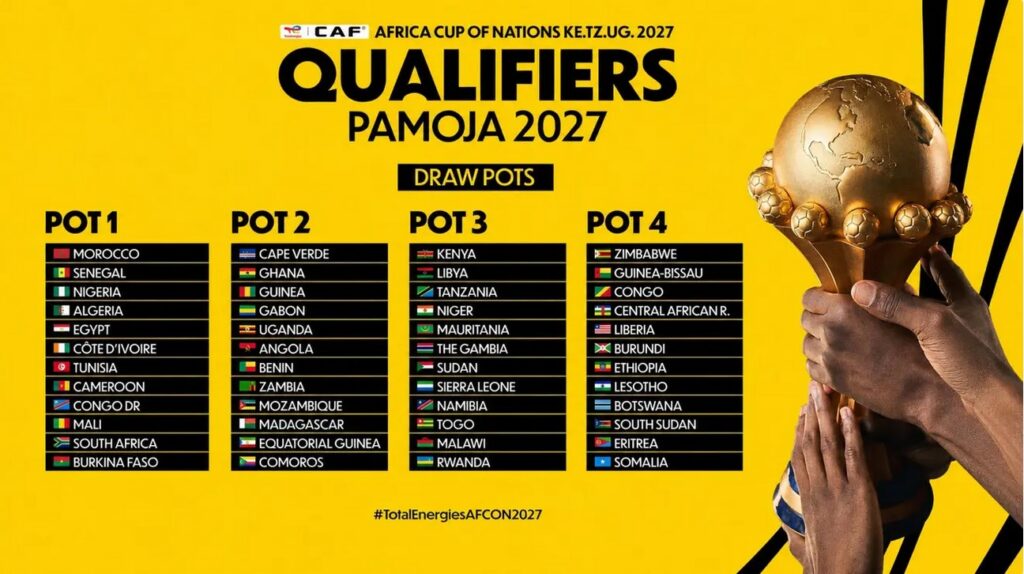
Mozambique, Madagascar, Equatorial Guinea and Comoros complete Pot 2, giving the draw further balance and increasing the prospect of competitive groups across the qualifying campaign.
Kenya, Tanzania and Uganda are already guaranteed places at the finals as co-hosts, but they will still take part in the qualifiers.
Because of their automatic qualification, only one additional team will qualify from any group containing one of the three host nations. In the remaining groups, the top two teams will qualify for the finals.
Pot 3 features Kenya, Libya, Tanzania, Niger, Mauritania, The Gambia, Sudan, Sierra Leone, Namibia, Togo, Malawi and Rwanda.
Zimbabwe, Guinea-Bissau, Congo, Central African Republic, Liberia, Burundi, Ethiopia, Lesotho, Botswana, South Sudan, Eritrea and Somalia have been placed in Pot 4.
South Sudan, Burundi, Somalia, Lesotho, Eritrea and Ethiopia came through the preliminary round to join the 42 highest-ranked teams in the group stage.
The 48 teams will be drawn into 12 groups, with the qualifying campaign to be played across three international windows.
The opening two matchdays are scheduled for the FIFA window from 21 September to 6 October 2026, before Matchdays 3 and 4 take place from 9 to 17 November 2026.
The final two rounds of matches will be played from 22 to 30 March 2027, when the line-up for the tournament is expected to be completed.
Several traditional heavyweights will enter the qualifiers as favourites, but recent AFCON campaigns have shown that the gap between established powers and emerging nations continues to narrow.
Central African Republic, Eritrea, Somalia and South Sudan will be among the teams hoping to reach the continental finals for the first time, while others will see the qualifiers as a chance to return to Africa’s biggest football stage.
With home-and-away matches spread over several months, away points, goal difference and consistency are expected to be decisive.
The draw will now determine the first major shape of the journey to PAMOJA 2027, as Africa’s national teams begin the battle for a place at the continent’s showpiece tournament.
AFCON 2027 qualifying draw pots
Pot 1: Morocco, Senegal, Nigeria, Algeria, Egypt, Côte d’Ivoire, Tunisia, Cameroon, DR Congo, Mali, South Africa, Burkina Faso
Pot 2: Cape Verde, Ghana, Guinea, Gabon, Uganda, Angola, Benin, Zambia, Mozambique, Madagascar, Equatorial Guinea, Comoros
Pot 3: Kenya, Libya, Tanzania, Niger, Mauritania, The Gambia, Sudan, Sierra Leone, Namibia, Togo, Malawi, Rwanda
Pot 4: Zimbabwe, Guinea-Bissau, Congo, Central African Republic, Liberia, Burundi, Ethiopia, Lesotho, Botswana, South Sudan, Eritrea, Somalia
Giants prepare to discover qualifying path for TotalEnergies CAF AFCON PAMOJA 2027
The road to one of the most historic editions of the Africa Cup of Nations begins this week as the continent’s football heavyweights and emerging nations prepare to discover their qualification fate for the TotalEnergies CAF AFCON PAMOJA 2027.
On Tuesday afternoon in Cairo, 48 nations will learn their route to the finals of a tournament already carrying enormous significance long before a ball is kicked.
For the first time in the competition’s history, the Africa Cup of Nations will be jointly hosted by three countries — Kenya, Tanzania and Uganda — in a landmark moment for East African football.
The draw, which takes place at the headquarters of the Egyptian Football Association, officially launches the next phase of the journey towards a tournament CAF hopes will unite an entire region under the spirit of “PAMOJA” — the Swahili word for “together”.
Set to run from 19 June to 17 July 2027, the finals will mark the return of AFCON to East Africa for the first time since Ethiopia hosted the competition in 1976. It also represents a major shift in scale and ambition, with three co-hosts working together to stage Africa’s biggest sporting event across multiple cities and nations.
The tournament could reach more than 400 million people across the East African region, underlining the growing commercial and cultural power of African football.
Tuesday’s draw will divide the 48 participating teams into 12 groups of four, with the top two sides in each group qualifying automatically for the finals. Because Kenya, Tanzania and Uganda are guaranteed places as hosts, only one additional nation will progress from each of their groups.
The qualification campaign itself will unfold across three FIFA international windows between September 2026 and March 2027.
Matchdays one and two are scheduled for 21 September to 6 October 2026, while the third and fourth rounds of fixtures will take place from 9 to 17 November 2026. The final qualification matches are set for 22 to 30 March 2027.
As always, the draw promises intrigue, pressure and the possibility of major surprises.
African giants such as Senegal, Morocco, Egypt, Algeria, Nigeria, Cameroon, Cote d’Ivoire and South Africa will all be among the favourites to reach the finals, but recent AFCON qualification campaigns have shown there are few easy routes left on the continent.
Smaller football nations continue to narrow the gap, with countries such as Comoros and Gambia proving in recent years that African football’s balance of power is evolving rapidly.
For some nations, the upcoming qualifiers could also deliver history.
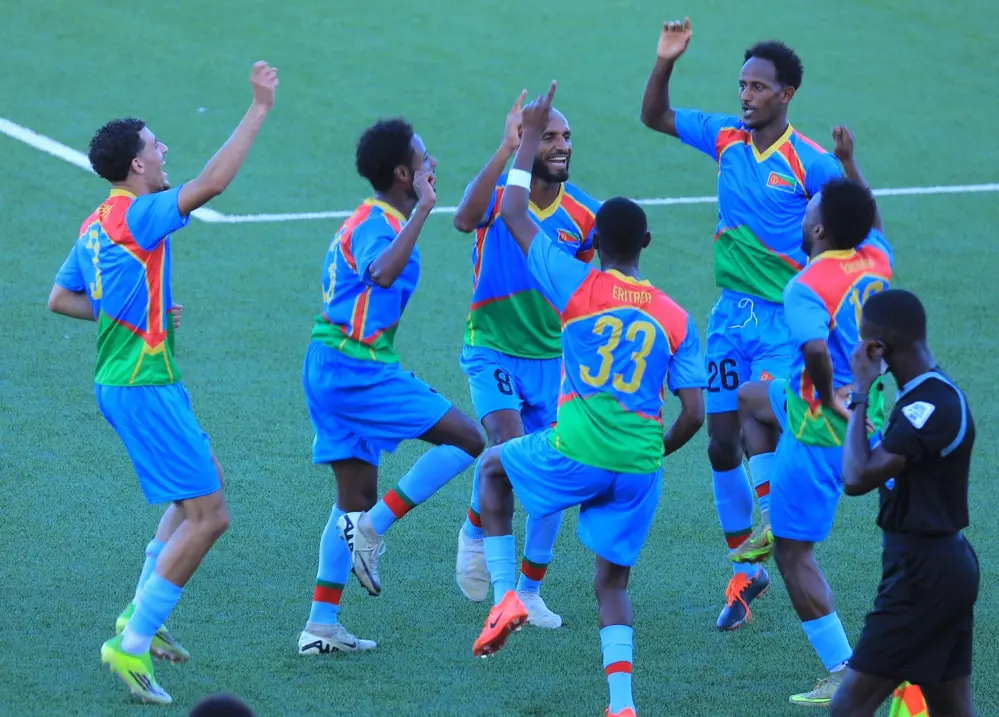
Central African Republic, Chad, Somalia, Eritrea and South Sudan are all still chasing a first-ever appearance at the Africa Cup of Nations finals. Burundi, Ethiopia and Lesotho also return with renewed ambition after surviving the preliminary stage to keep their dreams alive.
The preliminary round itself already provided a reminder of the passion and unpredictability that defines African football, with South Sudan, Burundi, Somalia, Lesotho, Eritrea and Ethiopia battling through tense two-legged encounters to book their places in the group phase.
Away results, goal difference and hostile atmospheres across the continent are again expected to play decisive roles in determining who reaches East Africa.
Beyond qualification, however, AFCON PAMOJA 2027 is increasingly being viewed as a defining tournament for African football’s future.
The commercial success and global reach of recent editions in Côte d’Ivoire and Morocco is evidence of the competition’s rapid growth. The East African edition is expected to build on that momentum with expanded infrastructure projects, regional cooperation and a new football market opening further to the world.
There is also symbolism attached to the tournament’s identity.
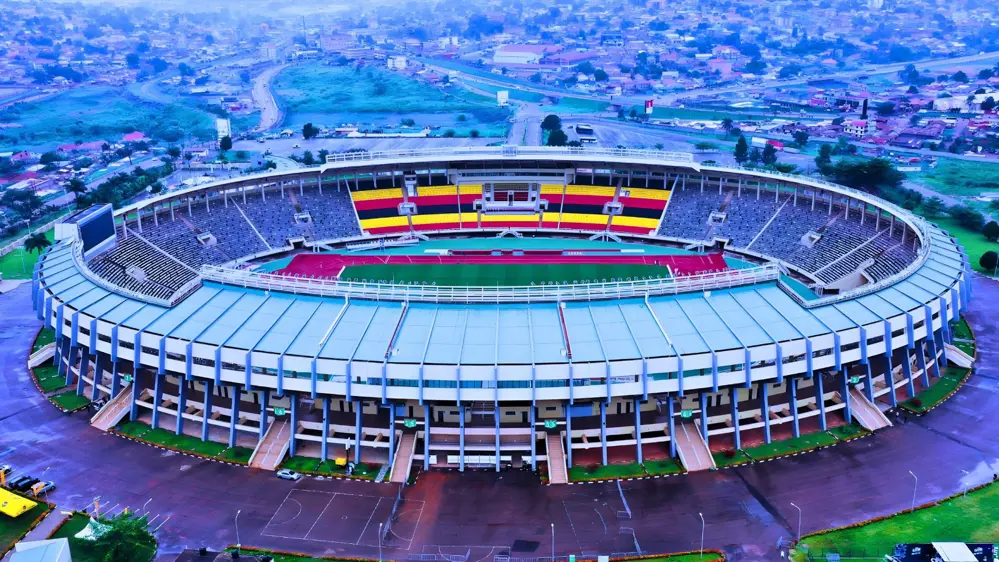
The word “PAMOJA” reflects CAF’s wider vision of unity across the continent through football, particularly at a time when African football continues to grow in global visibility, competitiveness and economic influence.
For the co-hosts, the tournament represents more than just football.
Kenya, Tanzania and Uganda view AFCON 2027 as a once-in-a-generation opportunity to accelerate infrastructure development, tourism and international investment while showcasing East Africa’s culture and passion for the game on the continental stage.
But before the stadiums fill and the celebrations begin in June 2027, Africa must first navigate one of the most demanding qualification campaigns in world football.
And on Tuesday in Cairo, the long road to East Africa truly begins.
SOURCE: CAF ONLINE